
.png)
Here's a question that might catch you off guard: Did you know that 70% of home cooks skip making baklava because they think phyllo dough is too hard to work with? The truth is, once you understand a few simple tricks.
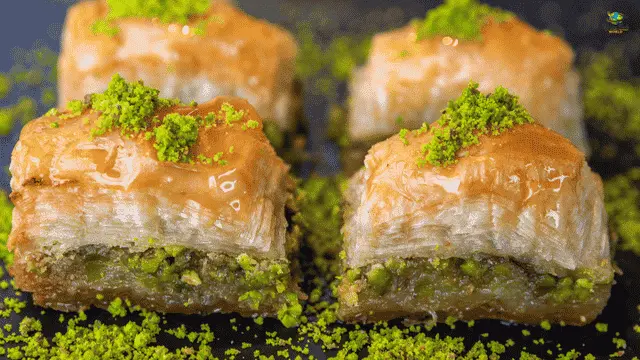 |
| Easy baklava dessert recipe |
this baklava dessert recipe comes together almost as easily as a basic layered casserole. Buttery, flaky phyllo, a sweet-spiced walnut filling, and a sticky honey syrup that soaks into every crevice—that's baklava in a nutshell, and yes, you can absolutely make it at home without a Greek grandmother standing over your shoulder (though it helps to channel one in spirit).
This guide walks you through everything, from ingredient swaps to the exact moment to pour that syrup, so your baklava turns out crisp, golden, and irresistibly sweet every time.
What Makes This Recipe Special?
Baklava has roots that stretch across Greek, Turkish, and Middle Eastern kitchens, and every region puts its own spin on it. This version leans into the classic Greek style: walnuts instead of pistachios, a touch of cinnamon and clove, and a honey-based syrup instead of a sugar syrup flavored with rosewater.
What sets this recipe apart is the nut-to-phyllo ratio—generous enough that every bite delivers crunch, but balanced so the pastry doesn't turn soggy. It's the kind of dessert that looks like it took hours of professional training, when really it just takes patience and a sharp knife.
Ingredients
- 1 package (16 oz) phyllo dough, thawed according to package instructions
- 1 lb walnuts, finely chopped (pistachios or almonds work as substitutes)
- 1 cup unsalted butter, melted (this is your glue and your flavor base)
- 1 teaspoon ground cinnamon
- 1/4 teaspoon ground cloves
- 1 cup granulated sugar (for the syrup)
- 1 cup water
- 3/4 cup honey
- 1 cinnamon stick
- 1 tablespoon lemon juice
Substitution tip: If you can't find phyllo dough, puff pastry can work in a pinch, though the texture will be denser and less traditional. For a nut-free version, toasted sunflower seeds make a surprisingly good stand-in.
Timing
| Recipe Detail | Time |
|---|---|
| Prep Time | 30 minutes |
| Cook Time | 50 minutes |
| Total Time | 90 minutes (plus at least 4 hours cooling time) |
That total active time is roughly 20% less than many traditional baklava recipes that call for hand-rolling individual phyllo cups—this layered, sheet-pan method saves you a real chunk of kitchen time without sacrificing flavor.
Instructions
1: Prep Your Pan and Filling
Preheat your oven to 350°F (175°C) and butter a 9x13-inch baking dish. In a bowl, mix the chopped walnuts with cinnamon and cloves. Pro tip: toast the walnuts for 5 minutes beforehand—it deepens the flavor more than most people expect.
Layer the Phyllo
Unroll the phyllo and keep it covered with a damp towel while you work (it dries out fast, and dry phyllo cracks instead of folding). Layer 8 sheets in the pan, brushing each one with melted butter before adding the next.
3: Add the Filling
Sprinkle about a third of the walnut mixture evenly over the phyllo. Repeat the layering process—8 more buttered phyllo sheets, another third of the nuts—two more times, finishing with a final stack of 8 buttered phyllo sheets on top.
4: Cut Before Baking
Using a sharp knife, cut the baklava into diamond or square shapes before it goes into the oven. This is a step people skip, and it's the reason so many home versions come out messy—cutting after baking shatters the crisp layers.
5: Bake
Bake for 45–50 minutes, or until the top turns a rich golden brown. Your kitchen will smell like a bakery around minute 30.
6: Make the Syrup
While the baklava bakes, combine sugar, water, honey, and the cinnamon stick in a saucepan. Simmer for 10 minutes, then stir in lemon juice and remove from heat.
7: Pour and Cool
This is the trick that makes or breaks baklava: pour the cool syrup over the hot baklava the moment it comes out of the oven (or pour hot syrup over cooled baklava—just never combine hot with hot). This temperature contrast is what keeps the layers crisp instead of soggy. Let it sit uncovered for at least 4 hours before serving.
Nutritional Information
Estimated per serving (based on 24 pieces):| Nutrient | Amount |
|---|---|
| Calories | ~210 kcal |
| Total Fat | 13 g |
| Saturated Fat | 4 g |
| Carbohydrates | 22 g |
| Sugar | 15 g |
| Protein | 3 g |
| Fiber | 1 g |
Baklava is undeniably a treat, but walnuts do contribute heart-healthy omega-3 fatty acids, so there's at least a small nutritional silver lining tucked into every syrupy bite.
Healthier Alternatives for the Recipe
- Reduce the syrup: Cutting the honey-sugar syrup by 25% still yields a sweet, satisfying result with noticeably less sugar per serving.
- Swap the butter: Melted coconut oil can replace butter for a dairy-free version with a subtle tropical note.
- Boost the fiber: Adding a tablespoon of ground flaxseed to the walnut mixture is barely noticeable in flavor but adds a nutritional boost.
- Portion control: Cutting smaller diamond pieces (36 instead of 24) makes it easier to enjoy a taste without overdoing it.
Expert Tips for Perfect Results
- Keep phyllo covered. A damp towel is non-negotiable; exposed phyllo dries out in minutes.
- Don't skimp on butter. It's what creates those famous crisp, flaky layers—this isn't the place to cut corners.
- Mind the syrup temperature rule. Hot baklava needs cool syrup, and vice versa. Same-temperature pairing leads to a soggy mess.
- Let it rest. Cutting into baklava too early means the syrup hasn't had time to soak through evenly.
Common Mistakes to Avoid
- Rushing the cooling time – Baklava needs those 4+ hours for the syrup to fully absorb; cutting corners here leaves it either too dry on top or too soggy underneath.
- Using cold butter – Melted butter spreads evenly; cold or softened butter tears the delicate phyllo sheets.
- Skipping the pre-bake cut – As mentioned above, this single step determines whether your baklava looks bakery-clean or homemade-messy.
- Overbaking – Watch it closely after the 40-minute mark; phyllo can go from golden to burnt quickly.
Variations and Substitutions
- Pistachio Baklava: Swap walnuts for pistachios for a greener filling and slightly milder, sweeter flavor—common in Turkish-style versions.
- Rosewater Syrup: Add a teaspoon of rosewater to the syrup for a floral Middle Eastern twist.
- Chocolate Baklava: Add a thin layer of chocolate hazelnut spread between phyllo layers for a modern, dessert-table showstopper.
- Mini Baklava Bites: Use a muffin tin to make individual portions—great for parties and easier portion control.
How to Store and Reheat
Baklava actually improves with a day or two of rest, as the syrup continues to settle into the layers. Store it at room temperature, covered loosely with foil or a clean towel (not sealed plastic, which traps moisture and softens the crisp texture), for up to one week.
It also freezes well for up to 3 months—just thaw at room temperature and, if you want that fresh-baked crispness back, pop it in a 300°F oven for 5-10 minutes.
Serving Suggestions
Baklava pairs beautifully with a strong cup of Greek coffee or a lightly spiced chai, since the bitterness balances the sweetness nicely. For a dessert spread, serve alongside fresh berries or a scoop of vanilla bean ice cream to cut through the richness. Hosting a Mediterranean-themed dinner?
Baklava makes an elegant finale next to hummus, dolmas, and a citrusy salad earlier in the meal.
Love this recipe? Try this one next! Moroccan Harira Soup: Easy Traditional Recipe
Frequently Asked Questions
1. Can I make baklava ahead of time? Yes—baklava actually tastes better a day or two after making it, once the syrup has fully soaked through.
2. Why is my baklava soggy? This usually happens when hot syrup is poured over hot baklava. Always pair opposite temperatures for the crispest result.
3. Can I freeze baklava? Absolutely. Wrap it tightly and freeze for up to 3 months; thaw at room temperature before serving.
4. What nuts work best in baklava? Walnuts are the traditional Greek choice, but pistachios, almonds, or a mix all work well.
5. How long does baklava last? Stored properly at room temperature, it stays fresh for up to a week.
6. Do I need a pastry brush for the butter? It helps for even coverage, but a small spoon or even clean fingers can work if you don't have one.
7. Is baklava served warm or cold? Baklava is traditionally served at room temperature, never warm, since heat can make the syrup runny.
Conclusion
This easy Greek baklava recipe proves that a dessert with centuries of tradition behind it doesn't have to be intimidating. With buttery phyllo, a fragrant walnut filling, and that perfect honey syrup soak, you'll have a showstopping treat ready in about 90 minutes of hands-on time. Give it a try tonight, and don't forget to leave a review in the comments below or subscribe for more recipes like this one!
