
.png)
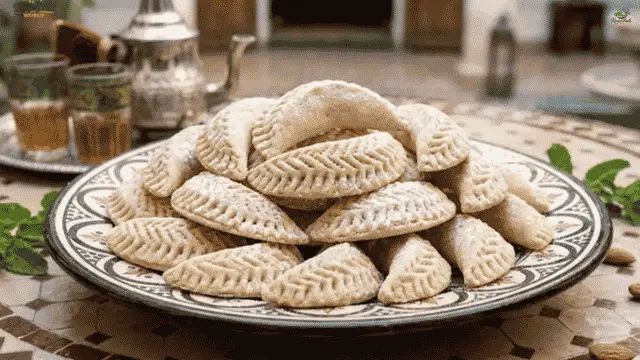 |
| Kaab El Ghazal Moroccan almond cookies |
What Is Kaab El Ghazal?
Kaab El Ghazal, also known as Moroccan Gazelle Horns, is one of the most elegant and traditional Moroccan pastries. The name refers to the pastry's distinctive crescent shape, which resembles the curved horn of a gazelle. Made with a delicate pastry shell and a fragrant almond filling, Kaab El Ghazal is especially popular during celebrations, family gatherings, weddings, holidays, and Moroccan tea ceremonies.
Unlike many heavily decorated desserts, Kaab El Ghazal has a simple and refined appearance. Its beauty comes from the careful shaping of the dough and the smooth almond paste hidden inside. The combination of ground almonds, sugar, orange blossom water, and warm spices creates a wonderfully aromatic filling.
This traditional Moroccan dessert may look complicated at first, but with a little patience, it is absolutely possible to make Kaab El Ghazal at home. The key is rolling the dough very thin, preparing a firm almond filling, and shaping each pastry into a graceful crescent.
Why You Will Love This Moroccan Kaab El Ghazal Recipe
There are many reasons to try this authentic Kaab El Ghazal recipe.
First, it uses simple ingredients that create an impressive result. Almonds are the star of the filling, while orange blossom water gives the pastry its unmistakable Moroccan aroma.
Second, these Moroccan almond cookies are perfect for serving with Moroccan mint tea. Their delicate sweetness pairs beautifully with the fresh flavor of tea.
Third, Kaab El Ghazal is a wonderful make-ahead dessert. You can prepare the pastries in advance and store them properly for later serving.
Most importantly, making traditional Moroccan pastries at home is a wonderful way to experience Moroccan food culture. Every crescent is shaped by hand, making the final dessert feel special and homemade.
Ingredients:
For the Almond Filling
- 2 cups finely ground almonds
- 3/4 cup powdered sugar
- 1 tablespoon unsalted butter, softened
- 1 teaspoon ground cinnamon
- 1 to 2 tablespoons orange blossom water
- 1/2 teaspoon finely grated orange zest, optional
For the Pastry Dough
- 2 cups all-purpose flour
- 1 tablespoon melted unsalted butter
- 1 tablespoon vegetable oil
- Pinch of salt
- About 1/2 cup warm water, added gradually
- 1 tablespoon orange blossom water, optional
For Finishing
- Powdered sugar, optional for serving
The quality of the almonds and orange blossom water makes a noticeable difference. For the smoothest almond paste, use finely ground almonds and avoid those with large pieces.
How to Make Kaab El Ghazal at Home
Step 1: Prepare the Almond Filling
Begin by placing the finely ground almonds in a large bowl. Add the powdered sugar, cinnamon, softened butter, and orange zest if using.
Mix everything thoroughly. Gradually add the orange blossom water, starting with a small amount. The goal is to create a smooth, firm almond paste that can easily be shaped without becoming sticky.
Knead the mixture gently until all the ingredients are evenly combined.
The almond filling should be soft enough to mold but firm enough to hold its shape. If it feels too dry, add a few drops of orange blossom water. If it becomes too soft, add a little more ground almonds.
Step 2: Shape the Almond Filling
Take small portions of the almond mixture and roll each portion between your palms.
Shape them into small logs or thin cylinders, approximately the length you want your Kaab El Ghazal to be.
Keep the almond logs relatively narrow because the pastry dough will wrap around them.
Place the shaped almond filling on a plate and cover it while you prepare the dough.
Step 3: Make the Pastry Dough
In a large mixing bowl, combine the flour and salt.
Add the melted butter and vegetable oil. Mix until the fat is evenly distributed throughout the flour.
Gradually add warm water while mixing. Add the water slowly, as you may not need the full amount.
Knead the dough until it becomes smooth, soft, and elastic. It should not be overly sticky.
Cover the dough and let it rest for about 20 to 30 minutes. Resting allows the gluten to relax, making the dough much easier to roll thinly.
Step 4: Roll the Dough Very Thin
Divide the dough into small portions.
Working with one portion at a time, roll the dough as thinly as possible. Traditional Kaab El Ghazal has a very delicate pastry shell, so thin dough is important.
You should be able to see some light through the dough when it is rolled correctly.
If the dough keeps shrinking while you roll it, allow it to rest for a few additional minutes before continuing.
Step 5: Wrap the Almond Filling
Place one almond log near the edge of the rolled dough.
Fold the dough over the almond filling and gently press around it to remove excess air.
Seal the dough carefully around the filling.
Using your fingers, gently press the pastry so that the dough hugs the almond paste closely.
Avoid leaving a thick layer of dough around the filling. The goal is a delicate shell surrounding the aromatic almond center.
Step 6: Create the Gazelle Horn Shape
Now comes the most recognizable part of the recipe.
Gently curve the pastry into a crescent shape. Press the edges lightly to seal them.
The pastry should look like a small curved horn or crescent.
Do not bend it too aggressively because the thin dough can tear.
Place the finished pastries on a parchment-lined baking tray.
Step 7: Prepare the Pastries for Baking
Traditionally, Kaab El Ghazal is often left with a smooth, simple surface without heavy decoration.
Use a toothpick or fine needle to make a few tiny holes in the pastry if desired. These small openings can help prevent air pockets from forming during baking.
Allow the shaped pastries to rest briefly before placing them in the oven.
Step 8: Bake the Kaab El Ghazal
Preheat your oven to approximately 350°F (175°C).
Bake the pastries until the dough is set and only lightly golden.
Kaab El Ghazal should remain relatively pale compared with many other cookies. Overbaking can make the pastry hard and dry.
The exact baking time depends on the thickness of your dough and the size of the pastries, but they generally need around 12 to 18 minutes.
Watch them carefully during the final minutes.
Remove the pastries from the oven and allow them to cool completely before serving.
Tips for Making the Best Kaab El Ghazal Recipe
Roll the Dough as Thin as Possible
Thin dough is one of the secrets to excellent Kaab El Ghazal. A thick pastry shell can overpower the almond filling.
Use Finely Ground Almonds
Fine almond flour or very finely ground almonds create a smoother and more traditional filling.
Do Not Add Too Much Orange Blossom Water
Orange blossom water is highly aromatic. A small amount can transform the filling, but too much can make the flavor overwhelming and the almond paste too soft.
Keep the Almond Filling Firm
The filling should hold its shape when rolled. A firm filling is easier to wrap and shape.Avoid Overbaking
Traditional Kaab El Ghazal should be tender and delicate. Baking until deeply browned can result in a dry pastry.
Let the Dough Rest
Resting the dough makes rolling much easier. It also helps prevent the dough from becoming difficult to stretch.
What Does Kaab El Ghazal Taste Like?
Kaab El Ghazal has a delicate, nutty, floral flavor.
The almond filling provides a naturally rich taste, while cinnamon adds gentle warmth. Orange blossom water contributes a fragrant floral note that is strongly associated with Moroccan pastries.
The pastry shell itself is mild and crisp-tender, allowing the almond filling to remain the main flavor.
When served with Moroccan mint tea, the sweetness of the pastry balances beautifully with the refreshing tea.
How to Serve Moroccan Gazelle Horns
Kaab El Ghazal is traditionally served alongside Moroccan tea, especially during special occasions and hospitality gatherings.
Arrange the pastries on a decorative serving plate and serve them at room temperature.
For a more festive presentation, you can lightly dust them with powdered sugar, although many traditional versions are served without heavy decoration.
They also make an elegant addition to a Moroccan dessert platter alongside other traditional Moroccan cookies and pastries.
How to Store Kaab El Ghazal
Allow the pastries to cool completely before storing them.
Place them in an airtight container and keep them at room temperature in a cool, dry location. Properly stored, they can remain enjoyable for several days.
If you need to prepare them well in advance, you can also freeze the baked pastries in an airtight freezer-safe container.
Allow frozen pastries to thaw at room temperature before serving.
Avoid storing them while they are still warm because trapped steam can soften the pastry and affect its delicate texture.
Can You Make Kaab El Ghazal Ahead of Time?
Yes. Kaab El Ghazal is an excellent make-ahead Moroccan pastry.
You can prepare and shape the pastries a day before baking and keep them covered in the refrigerator. Allow them to come closer to room temperature before baking.
Alternatively, bake them in advance and store them in an airtight container.
This makes them particularly convenient when preparing desserts for a celebration, dinner party, holiday, or Moroccan tea gathering.
Common Mistakes to Avoid
One common mistake is making the pastry dough too thick. Remember that the dough should be rolled very thin.
Another mistake is using too much liquid in the almond filling. Add orange blossom water gradually.
Overfilling the pastry can also make shaping difficult and may cause the dough to split.
Finally, avoid baking the pastries until they become dark brown. Kaab El Ghazal is known for its delicate, lightly baked exterior.
If you love Moroccan sweets, try this recipe! Chebakia Cookies | Traditional Moroccan Sesame and Honey Sweet
Frequently Asked Questions :
What does Kaab El Ghazal mean?Kaab El Ghazal translates approximately to "gazelle's ankle" or "gazelle's horn," referring to the pastry's distinctive curved shape.
Is Kaab El Ghazal a Moroccan dessert?Yes. Kaab El Ghazal is one of the best-known traditional Moroccan pastries and is closely associated with Moroccan hospitality, celebrations, and tea culture.
What is Kaab El Ghazal made of?The pastry is made with a thin flour-based dough wrapped around a filling of ground almonds, powdered sugar, cinnamon, butter, and orange blossom water.
Can I use almond flour for Kaab El Ghazal?Yes. Finely ground almond flour can work well for the filling. Choose a fine almond flour for the smoothest texture.
Why is my Kaab El Ghazal dough too thick?The dough may need additional rolling or resting. Letting the dough rest allows it to become more flexible, making it easier to roll thinly.
Why did my Kaab El Ghazal crack?Cracking can happen when the dough is too dry, the almond filling is too firm, or the pastry is stretched too aggressively. Make sure the dough is soft and elastic, and add the filling carefully.
Should Kaab El Ghazal be brown?Kaab El Ghazal is generally lightly baked rather than deeply browned. A pale golden exterior is preferable to a dark, heavily baked surface.
Can I freeze Moroccan Kaab El Ghazal?Yes. Baked Kaab El Ghazal can be frozen in an airtight container. Thaw the pastries at room temperature before serving.
What do you serve with Moroccan Gazelle Horns?The classic pairing is Moroccan mint tea. The refreshing tea complements the sweet almond filling and fragrant orange blossom water.
Is Kaab El Ghazal difficult to make?It requires some patience because the dough needs to be rolled very thin and the pastries shaped carefully. However, with practice, this traditional Moroccan pastry can be made successfully at home.
Conclusion
Kaab El Ghazal is much more than a simple cookie. It is a beautiful example of Moroccan pastry-making, combining finely ground almonds, fragrant orange blossom water, warm cinnamon, and an incredibly thin pastry shell.
Although shaping the traditional Moroccan gazelle horns requires a little practice, the result is well worth the effort. These delicate almond paste cookies are elegant enough for celebrations but simple enough to enjoy with an everyday cup of Moroccan mint tea.
If you are searching for an authentic Kaab El Ghazal recipe, this traditional approach is a wonderful place to begin. Take your time with the dough, keep the almond filling firm, and shape each crescent gently.
Once you master the technique, you can make these classic Moroccan almond cookies at home and bring a taste of Morocco to your own kitchen.
Recipe Summary
- Cuisine: Moroccan
- Category: Dessert / Pastry
- Main Ingredient: Almonds
- Preparation Time: About 45 minutes
- Resting Time: 20–30 minutes
- Baking Time: About 12–18 minutes
- Best Served: With Moroccan mint tea
