
.png)
Did you know that in Morocco, more than 60% of families still serve harira soup as the very first dish to break the fast during Ramadan, a tradition that has barely changed in over a century?

There's a reason this dish has stuck around for so long, and it isn't just nostalgia. Moroccan soup harira is one of those rare recipes that manages to be comforting, nourishing, and deeply flavorful all at once, built on a base of tomatoes, lentils, chickpeas, and warm spices that fill your kitchen with an aroma you won't forget.
If you've never made harira before, don't worry. This guide walks you through everything, from the ingredients you'll need to the exact steps, so you end up with a pot of soup that tastes like it came straight from a Marrakech kitchen. Whether you're cooking for Ramadan, a chilly weeknight, or just craving something hearty, this Moroccan soup harira recipe is about to become a regular in your rotation.
What Makes This Recipe Special?
Harira isn't just soup. It's practically a meal in a bowl. It combines protein-rich lentils and chickpeas with tender chunks of meat, a tomato-based broth, and a fragrant blend of Moroccan spices like ginger, turmeric, and cinnamon. What sets authentic harira apart from a basic tomato soup is a thickening technique called tedouira, a flour-and-water mixture stirred in near the end of cooking that gives the broth its signature silky, slightly thick texture.
This soup has deep roots in Moroccan and North African cuisine, historically served to break the daily fast during Ramadan because it's packed with enough carbs, protein, and fiber to restore energy fast. But you don't need a special occasion to enjoy it. Harira is naturally adaptable, budget-friendly, and freezer-friendly, which makes it an easy win for meal prep too.
Ingredients
Here's what goes into a classic pot of Moroccan soup harira. Most of these ingredients are pantry staples or easy to find at any grocery store.
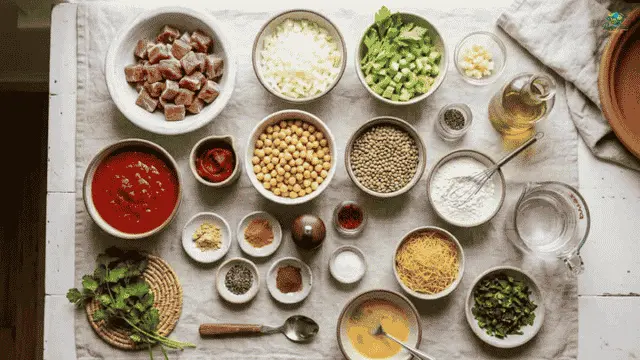
For the soup base:
- 1 lb (450g) lamb or beef stew meat, cut into small cubes (chicken works too)
- 2 tablespoons olive oil
- 1 large onion, finely chopped
- 3 celery stalks, finely chopped (celery leaves included for flavor)
- 3 cloves garlic, minced
- 1 can (28 oz) crushed tomatoes, or 6 fresh tomatoes, grated
- 2 tablespoons tomato paste
- 1 cup brown or green lentils, rinsed
- 1 cup dried chickpeas, soaked overnight (or 1 can, drained)
- 1 teaspoon ground ginger
- 1 teaspoon turmeric
- 1 teaspoon ground cinnamon
- 1 teaspoon black pepper
- 1/2 teaspoon saffron threads (optional, but adds a beautiful color and aroma)
- 8 cups water or broth
- Salt to taste
For the tedouira (thickener):
- 1/4 cup flour
- 1/2 cup water
To finish:
- 1/2 cup vermicelli noodles (optional)
- Fresh cilantro and parsley, chopped
- 1 egg, beaten (optional, for a silky finish)
- Lemon wedges, for serving
- Dates, for serving (traditional Ramadan pairing)
Substitution tip: No lamb on hand? Beef chuck or even chicken thighs work beautifully. For a vegetarian version, skip the meat and use vegetable broth. The lentils and chickpeas already provide plenty of protein and body.
Timing
| Recipe Detail | Time |
|---|---|
| Prep Time | 20 minutes |
| Cook Time | 70 minutes |
| Total Time | 90 minutes |
That's roughly 90 minutes from start to finish, which is actually about 20% faster than many traditional harira recipes that call for slow-simmering the meat for two hours or more. Using smaller meat cubes and a hot simmer helps speed things along without sacrificing flavor.
Instructions
1: Brown the Meat and Aromatics
Heat the olive oil in a large pot over medium heat. Add the meat, onion, and celery, and cook for about 5-7 minutes until the meat is lightly browned and the onions turn translucent. This step builds the flavor foundation for your entire pot of soup, so don't rush it.
2: Add Spices and Garlic
Stir in the garlic, ginger, turmeric, cinnamon, and black pepper. Cook for 1 minute until fragrant. This quick toast wakes up the spices and makes a noticeable difference in the final flavor.
3: Build the Tomato Base
Add the crushed tomatoes and tomato paste, stirring well to combine. Let this simmer for 5 minutes so the tomatoes lose their raw edge and deepen in color.
4: Add Lentils, Chickpeas, and Liquid
Pour in the water or broth, then add the lentils and soaked chickpeas (if using dried). Bring to a boil, then reduce to a gentle simmer. Cover and cook for 45-50 minutes, stirring occasionally, until the meat is tender and the lentils have softened.
Pro tip: If using canned chickpeas, add them in the last 15 minutes since they're already cooked and don't need as much time.
5: Make the Tedouira
In a small bowl, whisk the flour and water together until completely smooth with no lumps. Slowly drizzle this mixture into the simmering soup while stirring constantly. This is what gives harira its classic thick, velvety texture, so take your time and pour it in gradually.
6: Add the Finishing Touches
Stir in the vermicelli noodles and cook for another 5-7 minutes until tender. If using the beaten egg, drizzle it into the soup while stirring gently to create thin, silky ribbons. Taste and adjust salt as needed.
7: Garnish and Serve
Remove from heat and stir in fresh cilantro and parsley. Serve hot with lemon wedges on the side and a plate of dates, just like it's traditionally enjoyed in Morocco.
Nutritional Information
Approximate values per serving (based on 6 servings):
| Nutrient | Amount |
|---|---|
| Calories | 320 kcal |
| Protein | 22g |
| Carbohydrates | 38g |
| Fiber | 9g |
| Fat | 9g |
| Sodium | 480mg |
Harira is naturally high in fiber and plant-based protein thanks to the lentils and chickpeas, which also means it keeps you fuller for longer compared to a typical broth-based soup.
Healthier Alternatives for the Recipe
- Lower the sodium: Use low-sodium broth and season with fresh herbs and lemon juice instead of extra salt.
- Boost the fiber: Add a handful of chopped spinach or Swiss chard in the last 10 minutes of cooking.
- Lighter protein: Swap the lamb or beef for skinless chicken breast or leave the meat out entirely for a fully plant-based, vegetarian harira.
- Gluten-free option: Replace the flour-based tedouira with a cornstarch slurry, and skip the vermicelli or use a gluten-free noodle instead.
Expert Tips for Perfect Results
- Don't skip the tedouira slowly: Pouring the flour mixture in too fast can create lumps. Add it in a thin stream while whisking or stirring continuously.
- Soak your chickpeas ahead of time: Dried chickpeas soaked overnight cook much more evenly than a quick-soak method.
- Taste as you go: Moroccan spice blends vary in intensity, so adjust ginger, cinnamon, and pepper to your taste rather than following measurements exactly.
- Time-saving tip: Use canned chickpeas and a pressure cooker for the meat to cut total cook time nearly in half.
Variations and Substitutions
- Vegetarian Harira: Skip the meat, use vegetable broth, and double the lentils and chickpeas for a still-hearty, protein-packed version.
- Spicier Harira: Add a pinch of cayenne or harissa paste for extra heat.
- Rice instead of vermicelli: Some regions in Morocco use rice instead of noodles; just add 1/4 cup uncooked rice along with the lentils.
- Extra herby version: Double the cilantro and parsley for a brighter, fresher finish.
Serving Suggestions
Harira is traditionally served with a few simple companions that round out the meal beautifully:
- Dates: Their natural sweetness balances the savory, spiced broth.
- Chebakia or honey-sesame cookies: A classic Ramadan pairing for a sweet finish.
- Hard-boiled eggs: Sliced on top for extra protein.
- Crusty bread: Perfect for scooping up every last bit of broth.
- A squeeze of lemon: Brightens the whole bowl right before eating.
Common Mistakes to Avoid
- Adding the tedouira too quickly: This is the number one cause of lumpy soup. Always pour it in slowly while stirring.
- Not soaking dried chickpeas: Skipping this step leads to unevenly cooked, tough chickpeas even after a long simmer.
- Under-seasoning: Harira relies on layered spices, so don't be shy with the ginger, turmeric, and cinnamon.
- Boiling too hard: A gentle simmer keeps the meat tender; a rolling boil can toughen it.
How to Store and Reheat
Harira actually tastes even better the next day, once the flavors have had time to meld.
- Refrigerator: Store in an airtight container for up to 4 days.
- Freezer: Freezes well for up to 3 months. Leave out the vermicelli before freezing and add fresh noodles when reheating, since noodles can turn mushy after thawing.
- Reheating: Warm gently on the stovetop over medium-low heat, stirring occasionally. Add a splash of water or broth if the soup has thickened too much in the fridge.
(FAQ)
1. What is Moroccan harira soup made of? Harira is made with a tomato base, lentils, chickpeas, meat (often lamb or beef), and warm spices like ginger, turmeric, and cinnamon, thickened with a flour-water mixture called tedouira.
2. Is harira soup healthy? Yes, harira is high in fiber and plant-based protein from the lentils and chickpeas, and it's relatively low in fat compared to many meat-based soups.
3. Can I make harira soup vegetarian? Absolutely. Simply leave out the meat and use vegetable broth instead of water or meat broth. The lentils and chickpeas still provide plenty of protein and texture.
4. Why is harira served during Ramadan? Harira is traditionally the first dish eaten to break the fast because it's packed with carbohydrates, protein, and fiber, which helps restore energy quickly after a full day of fasting.
5. Can I freeze harira soup? Yes, harira freezes well for up to 3 months. It's best to leave out the vermicelli noodles before freezing and add fresh ones when reheating.
6. What can I substitute for vermicelli in harira? Rice is a common substitute in some Moroccan households; just add uncooked rice along with the lentils and let it cook through.
7. How do I thicken harira soup? The traditional method is the tedouira, a smooth mixture of flour and water stirred slowly into the simmering soup. A cornstarch slurry works as a gluten-free alternative.
Conclusion
Moroccan harira soup is a warm, spiced, protein-rich bowl that's easy to make at home in about 90 minutes. With tender meat, lentils, chickpeas, and a silky tomato broth, it's a dish worth adding to your regular rotation, not just for Ramadan. Give this recipe a try, and don't forget to leave a comment or review below sharing how yours turned out. Subscribe for more authentic recipes delivered straight to your inbox!
